





By Matt Minton
According To The variety What does it mean to bring a child into today’s world? Based on some of this year’s buzziest films, that question is on the minds of contemporary directors and writers.
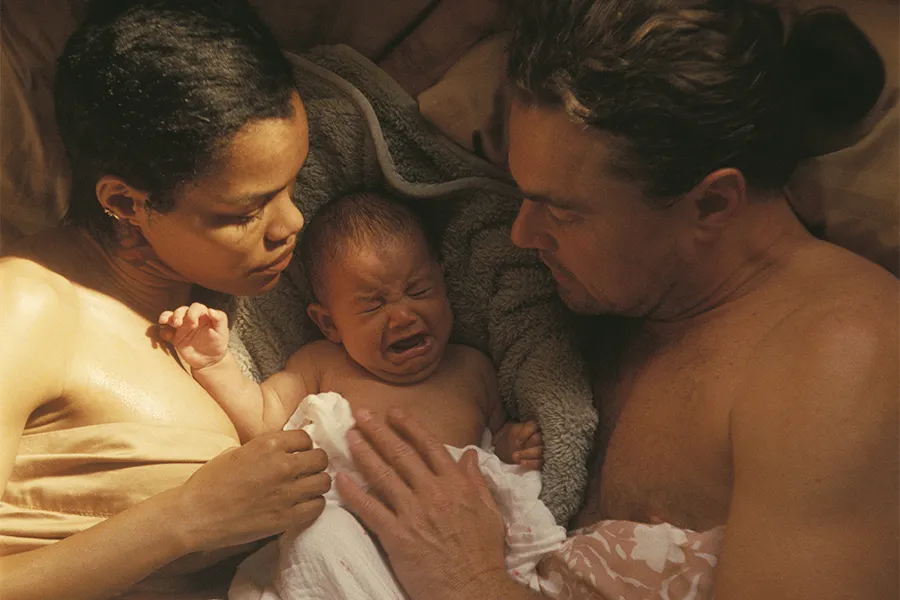
From the postpartum loneliness and depression that many mothers face depicted in Lynne Ramsay’s “Die My Love,” the multigenerational fight for meaningful change in Paul Thomas Anderson’s “One Battle After Another” to the economic stresses placed on family in Park Chan-wook’s “No Other Choice,” many of this year’s films take an unflinching look at the anxiety parents — and, in turn, their children — face in today’s increasingly politically volatile world.
In appreciating the links between these different stories, “Train Dreams” director and co-writer Clint Bentley says: “The world, for most of us, feels like it’s turning on its axis a bit. Whether we live in Des Moines or Dubai, we feel like the world is changing in a way we can’t quite understand, and that there might be a kind of end-of-the-world feeling even as we’re all going on. Part of that is through, ‘What do I give to the next generation? How do I take care of my kids and give them something when everything seems like it’s fucked up, and that we all kind of fucked it up?’”
In tackling grief, Oscar winner Chloé Zhao’s period piece “Hamnet” explores how the death of the son of William (Paul Mescal) and Agnes Shakespeare (Jessie Buckley) led to the creation of “Hamlet.” When Maggie O’Farrell, who wrote the novel “Hamnet” and co-wrote the screenplay, read large Shakespeare biographies, she found herself “really angered” at scholars who claimed it was “impossible” to know whether the revered playwright grieved or not. “I threw the book across the room because you just think, ‘What are you talking about? Of course he grieved.’ And even if child mortality was high in the 16th century, which of course it was, it doesn’t make it any less devastating when your child dies,” O’Farrell says. “I refuse to believe that anywhere in the world at any point in time, it’s anything less than catastrophic to lose a child. In a way, I wanted to put Hamnet center stage and say to people, ‘We owe this child so much.’”
Zhao and O’Farrell tap into how art can serve as a transcendent, cathartic force, as Shakespeare’s writing ensures Hamnet isn’t forgotten. O’Farrell says: “That’s why the line ‘Remember me,’ which the book ends with, has always been very important because I just wonder if that’s why Shakespeare wrote it. But obviously, Agnes and him had no idea for how many hundreds of years Hamnet would [actually] be remembered.”
“Train Dreams,” which follows the life of an ordinary man (Joel Edgerton) in the early 20th century across the Pacific Northwest, serves as a great companion piece to “Hamnet” for its meditative exploration of grief. However, Bentley also wrestles with “the real tragedy” of parents having to spend long periods of time away for work: “You’re always kind of catching up and just when it feels you’re getting used to being back home, you’re leaving again. A lot of people experience that whether you’re a filmmaker, truck driver or somebody needing to leave their country.”
Some directors, including Cherien Dabis, found the process of making their films cathartic and inspirational in their own right. For Dabis, writing, directing and acting in “All That’s Left of You,” a decades-spanning personal tale of a Palestinian family’s fight for survival, became a way to understand her own intergenerational trauma.
“I definitely wanted to draw attention to the struggles of families under occupation, but especially parents who don’t really have the ability to protect their kids anymore,” Dabis says. “Often, what we see in Palestine is kids who, at some point, realize, ‘Well, my parents can’t protect me, so what use are they?’ It’s like parents lose all authority. I think that’s a problem; that’s something that we need to take a look at.”
The film, which is Jordan’s entry for international feature, also deals with the loss of childhood innocence, as the young child Noor watches his father being stripped naked by Israeli soldiers. The father-son relationship quickly deteriorates in the years following the humiliation, and the scene was inspired by Dabis’ own experience — her first memory of traveling to Palestine.
“My family was held at the border between Jordan and the West Bank for 12 hours; my parents were interrogated multiple times. The soldiers searched through all the contents of our suitcases and then ordered all of us to be strip searched, including myself and my baby sisters, who were ages 3 and 1,” Dabis recalls. “It was one of the first moments in my life where I really understood, viscerally, what it meant to be Palestinian.”
As many of these directors have traveled around the world with their films, they’ve realized how universal these stories can be in their specificity.
“I’m always so excited when it feels like there’s something in the zeitgeist and filmmakers are capturing it. They’ve come together and made films at a similar moment in time, therefore creating a cultural dialogue — it’s almost proof that we’re all connected somehow,” Dabis says. “Even prior to this year, there have been trends toward really talking honestly and openly about motherhood in a way that empowers women.”
To unpack the unspoken pressures of motherhood, Mary Bronstein’s anxiety-inducing “If I Had Legs I’d Kick You” situates the viewer in the subjective experience of one mother’s (Rose Byrne) life as she struggles to care for her child suffering from a mysterious illness. What’s inventive about the craft is Bronstein choosing to have the child’s face be offscreen for most of the runtime, allowing the sound design to put viewers on edge.
“I couldn’t think of another film that really reflected the feelings and experience I was having that got into the existential confusion of identity,” Bronstein says. “My film can be abstracted out to the feeling of disappearing into a care-taking role and how to hold onto your identity. Can you be an individual and a mother at the same time?”
While Bronstein has received positive feedback from mothers, what has pleasantly surprised her is hearing from young people who are finally understanding what their mother went through in raising them.
“It can feel like a betrayal to the love of your child, and what I’m expressing in the movie is that it’s not. We should be able to talk about these difficult things and the loss of identity that women feel, and the scary parts of being in charge of another living human,” she says. “For women, there’s a freedom in seeing somebody finally express that to you.”




+ There are no comments
Add yours