










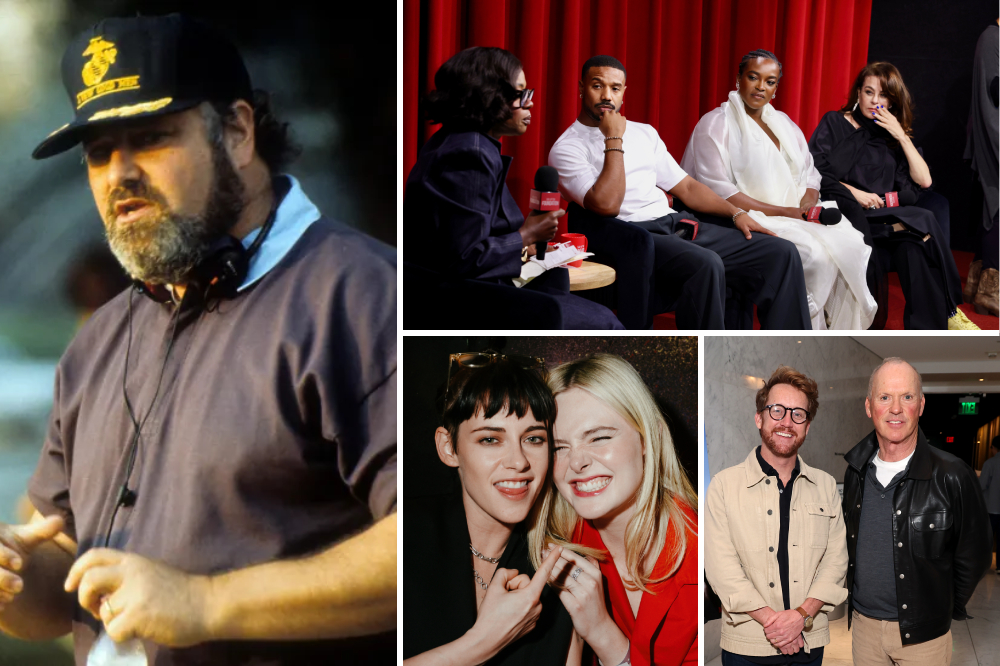
According To The variety It’s Dec. 15, 2025, and this edition is dedicated to the magnificent Rob Reiner.
The news out of Los Angeles is devastating. Rob Reiner and his wife, Michele Singer, are no longer with us, and the shock of that loss still hasn’t settled in. In moments like this, language feels inadequate. I won’t focus on the tragedy. Instead, all we can do is look back — at the work, at the moments, at the stories — and say thank you.
The first Rob Reiner film I ever saw was “A Few Good Men.” I was too young to understand the mechanics of military law or the intricacies of courtroom procedure, but I understood the electricity of conviction. The thrill of watching ideas collide. The power of words when they felt sharp as a blade.
Jack Nicholson roared onto the screen, and even then, it felt like a cultural moment being born in real time. Reiner received his sole Academy Award nomination as a producer on “A Few Good Men” (1992), a fitting recognition for a film that crackles with intelligence and moral urgency. Nominated for best picture, it didn’t win the top prize, but it didn’t need to. The film entered the bloodstream of American cinema and never left.
From that moment on, I was hooked.
Reiner’s career is one of the most quietly astonishing in modern Hollywood history. Not because he chased prestige — on the contrary, he chased truth across genres that rarely get that kind of respect.
“Stand by Me” (1986) remains one of the purest coming-of-age films ever made. It understands childhood not as nostalgia, but as a fragile, fleeting state of grace. “I never had any friends later on like the ones I had when I was twelve,” the film tells us. Neither did we.
The train bridge. The leeches. The way he captured River Phoenix, one of my all-time favorite actors — it’s all encapsulated in a film that meets you where you are and stays with you long after.
The Princess Bride” (1987) created joy without irony. Romance without embarrassment. Humor without cruelty.
“Hello. My name is Inigo Montoya.”
What once struggled at the box office became a generational heirloom, passed down like a favorite bedtime story, reminding us that sincerity is not something to outgrow.
“When Harry Met Sally…” (1989) changed romantic comedies forever, proving they could be adult, literate and honest. Nora Ephron’s dialogue sings, and Reiner’s direction let it breathe. The fake orgasm at Katz’s Deli. The way the film builds to Harry’s New Year’s Eve confession. It showed the entire genre what was possible.
Reiner carried that belief into “The American President” (1995), offering a vision of leadership rooted in decency, eloquence and moral clarity. It was romantic, yes, but also aspirational, planting the seeds for what would later grow into “The West Wing.” It reminded us what politics could sound like when it aimed higher.
Reiner could terrify us too. “Misery” (1990) turned psychological horror into something intimate and unbearable, and Kathy Bates’ Oscar-winning performance remains one of the most indelible in Academy history.
And then there was “This Is Spinal Tap” (1984), a film so inventive it essentially created the mockumentary, forever changing the language of comedy. It goes to eleven, and it always will.
Before directing, Reiner became part of television history as Michael “Meathead” Stivic on “All in the Family,” earning two Emmy Awards and helping redefine what a sitcom could confront and contain. Later, he co-founded Castle Rock Entertainment, the company behind “The Shawshank Redemption,” “Seinfeld” and so many other landmarks of film and television.
What made Reiner special was never the trophies. It was his belief that comedy could carry heartbreak, that drama could still be funny, and that genre was not a limitation — it was an invitation. He trusted viewers to be smart, curious and open. He trusted all of us. Not many filmmakers do that.
So thank you for “A Few Good Men,” the film that started it all for me. Thank you for “Stand by Me,” “The Princess Bride,” “When Harry Met Sally…” and “The American President.” Thank you for teaching us that love can be earnest, friendship can be eternal, and truth, no matter how uncomfortable, is worth fighting for.
Your light lives on in every rewatch, every line read aloud, every perfect moment you gave us. That is immortality. And that is what lasts.





+ There are no comments
Add yours